UX Design & Research · Hardware · IoT · Bellwether Coffee
A $70k commercial roaster shouldn't require a manual. I designed the connected experience that made it feel like second nature.
Context
Bellwether Coffee makes the world's first commercial-grade ventless electric coffee roaster. Their customers range from independent cafés to enterprise coffee programs, all of whom need remote visibility into their roaster's status, performance, and maintenance needs.
I led UX research and design for the IoT companion experience: the mobile and web surfaces that connect operators to their hardware in real time.
The Problem
Without a connected interface, operators had no visibility into their roaster's status unless they were physically in the room. Issues went undetected until they caused a failed batch or a service call. Remote management of multi-location deployments was impossible.
The hardware was sophisticated. The software layer hadn't caught up, and operators were losing trust in the machine because they couldn't see what it was doing.
Process
Field research: Visited roasting operations across California: cafés, roasteries, corporate campuses. Interviewed operators about their mental model of the machine and what anxieties they had about unattended operation.
Information architecture: Mapped all hardware data streams to operator needs. Separated "at a glance" status from "diagnostic detail." Most operators needed the former; only technicians needed the latter.
Alert design: Designed a notification system that was opinionated about severity. The biggest failure of the old system was alert fatigue. Everything felt urgent, so nothing did. We introduced three tiers with distinct visual and haptic treatments.
Dark mode UI: The roasting environment is often dimly lit. Designed the entire interface with a dark-first approach, tested under ambient roastery conditions to ensure legibility.
Outcomes
Reflection
Designing for hardware means accepting that the software is always secondary to the physical experience. The most important design decision I made was choosing what NOT to show. Operators didn't need all the data the roaster generated. They needed confidence that everything was fine, with clear escalation when it wasn't. Calm software makes for better coffee.
The Design
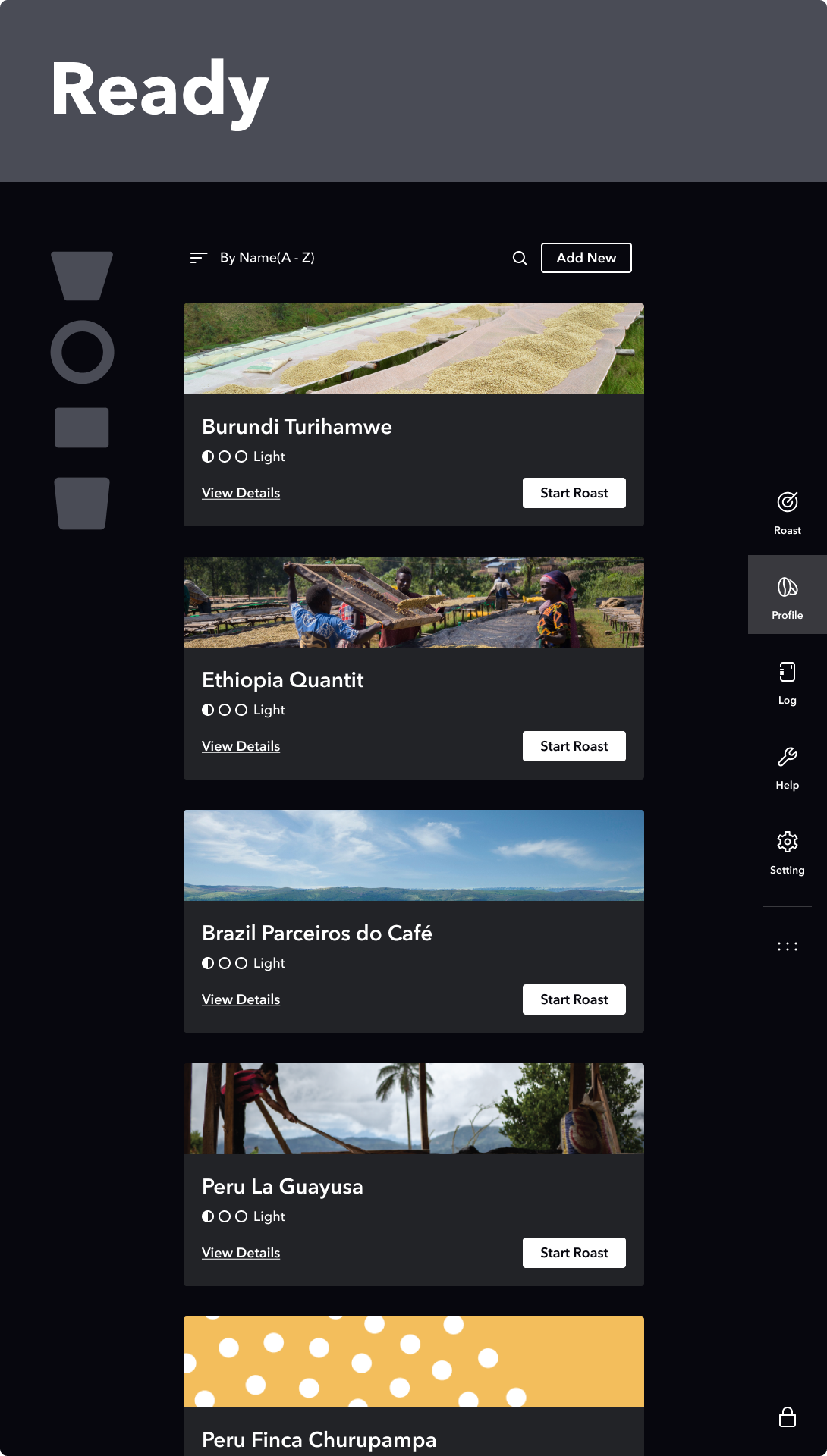
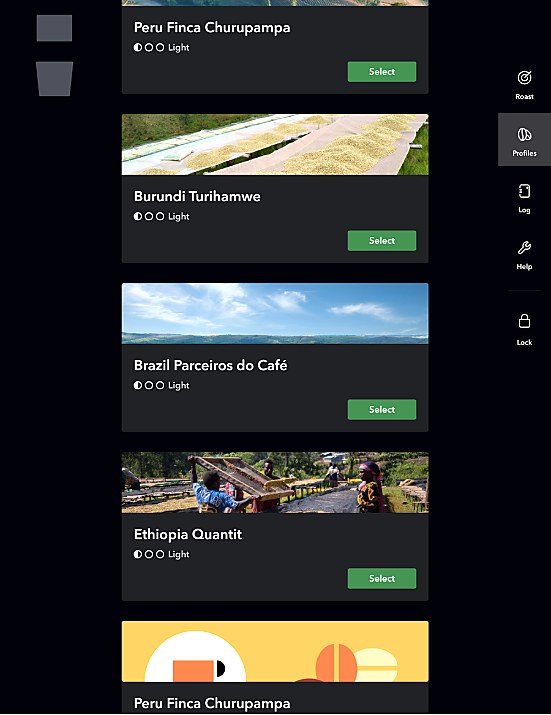
Bean Library
Select from saved roast profiles. Each bean has its origin, roast level, and photo. One tap to start.
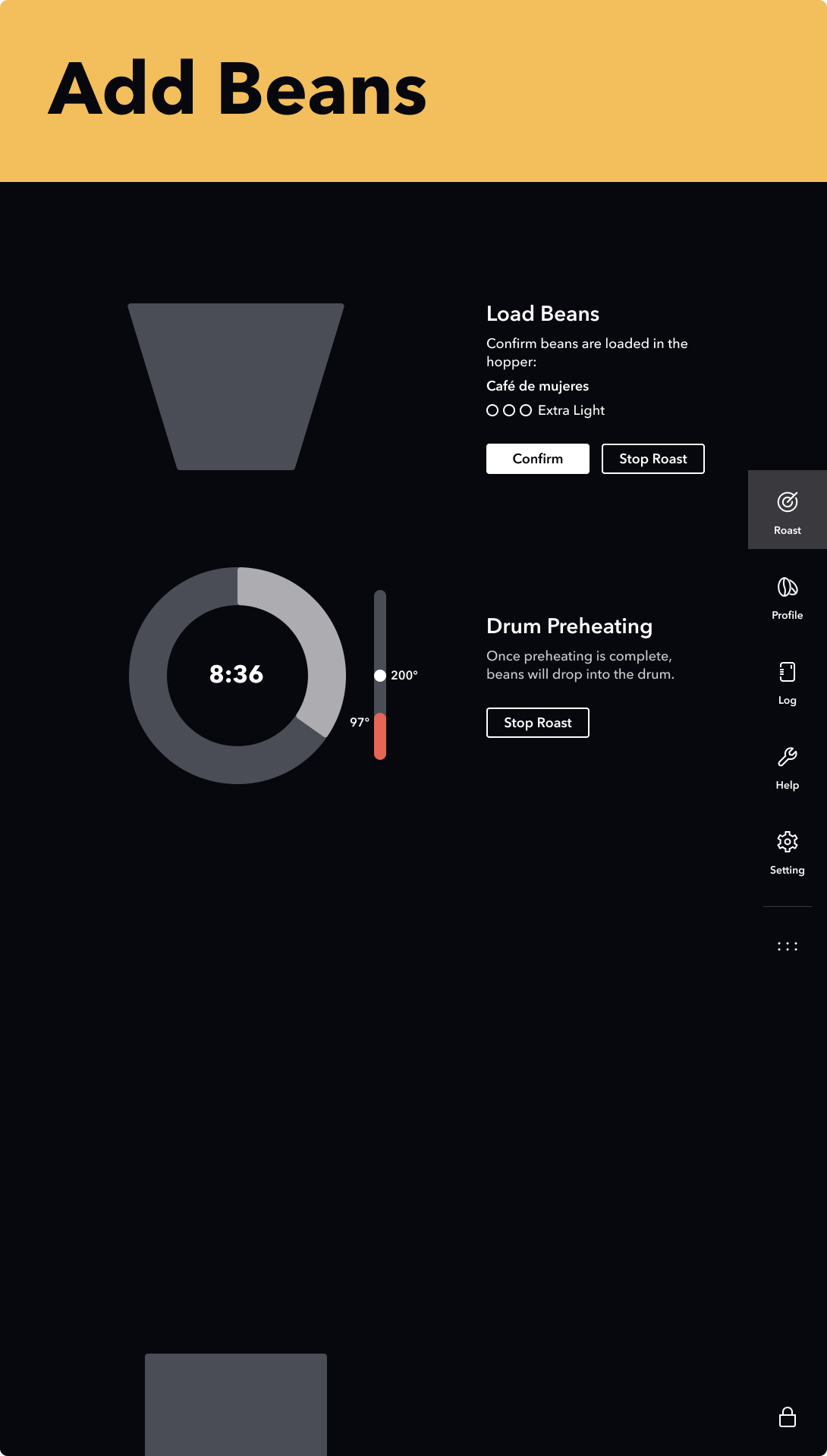
Add Beans
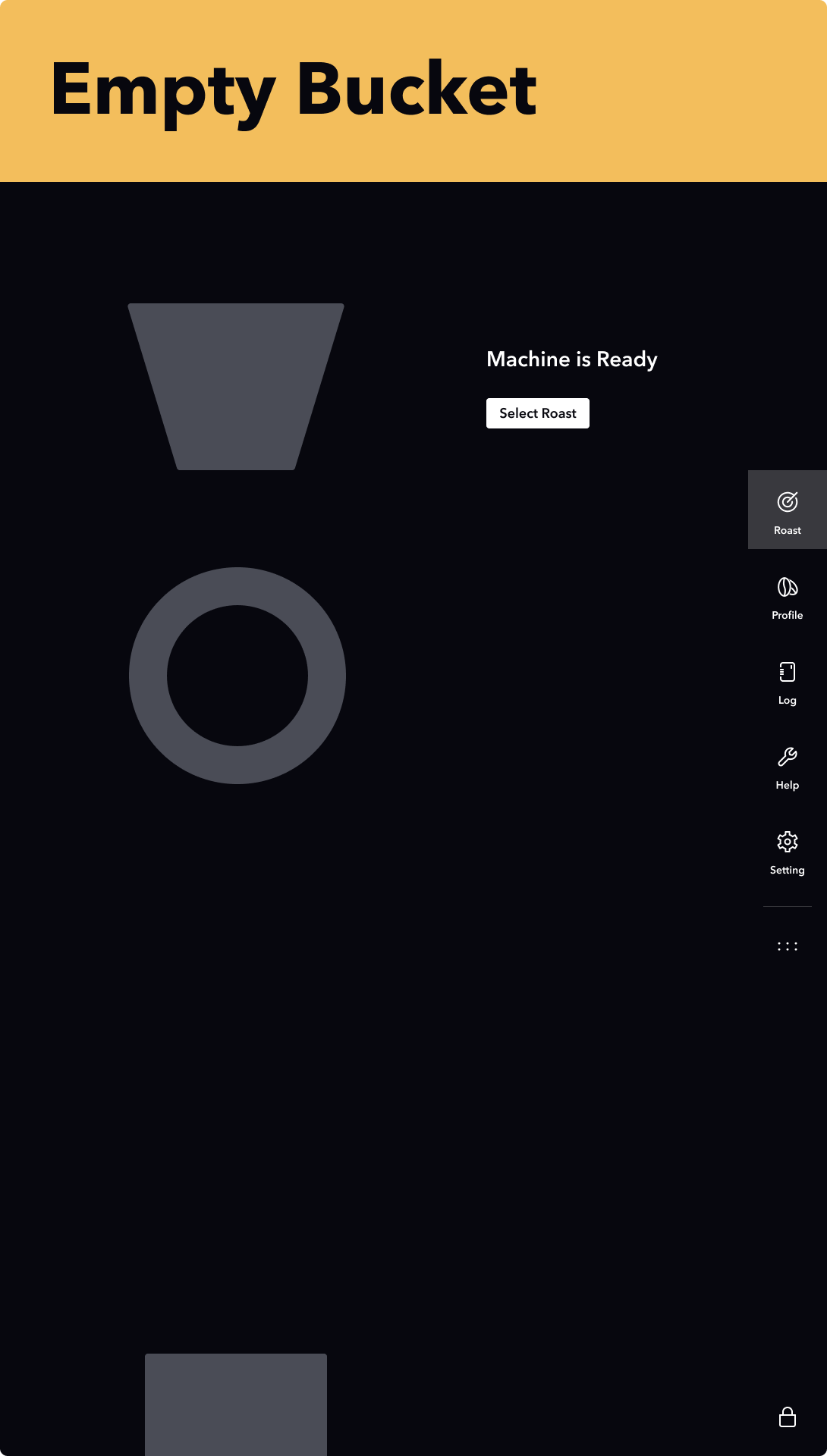
Physical step guidance: confirm beans are loaded, see roast level, and confirm or stop. The hopper graphic mirrors the real machine state.
Drum Preheating
Timer counts down while the drum heats to target. The filled hopper graphic confirms beans are ready. Once preheating completes, beans drop automatically.
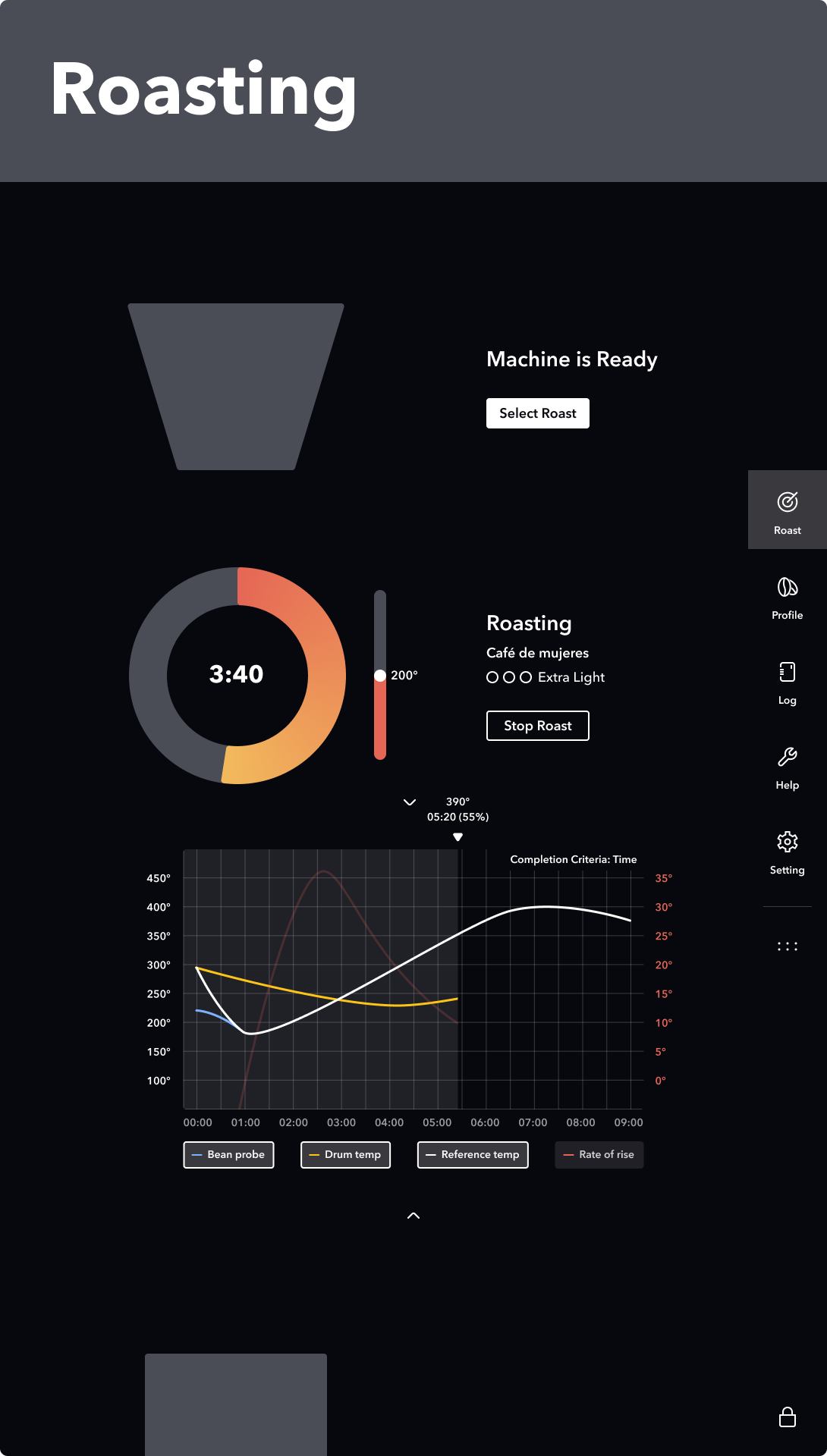
Roasting
Live temperature curves track bean probe, drum temp, reference, and rate of rise. The progress ring shows time remaining. Completion criteria visible at a glance.
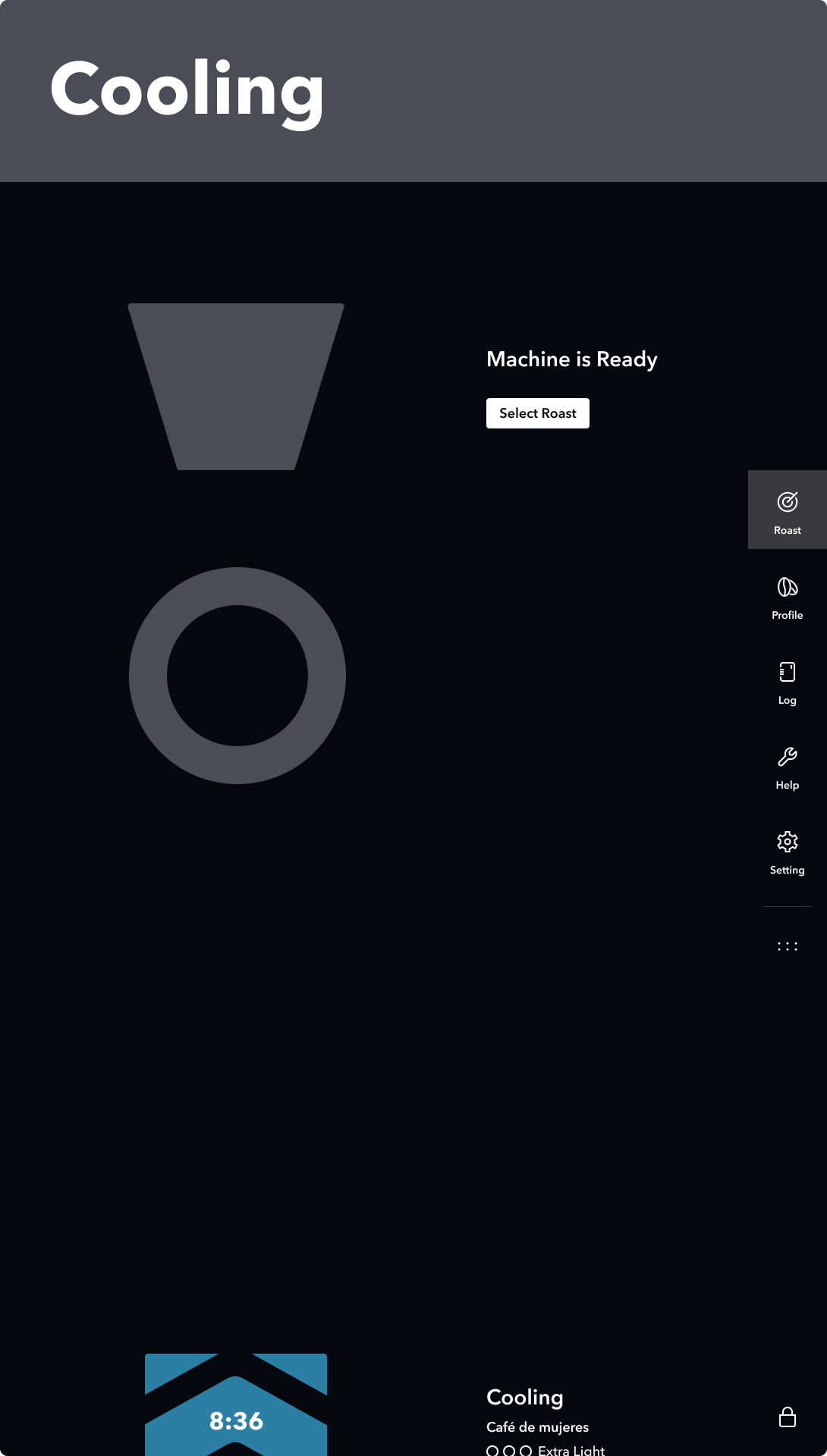
Cooling
After roasting completes, the cooling cycle begins automatically. The cooling tray graphic shows machine state. No user action needed until beans are cool.
Roast Completed
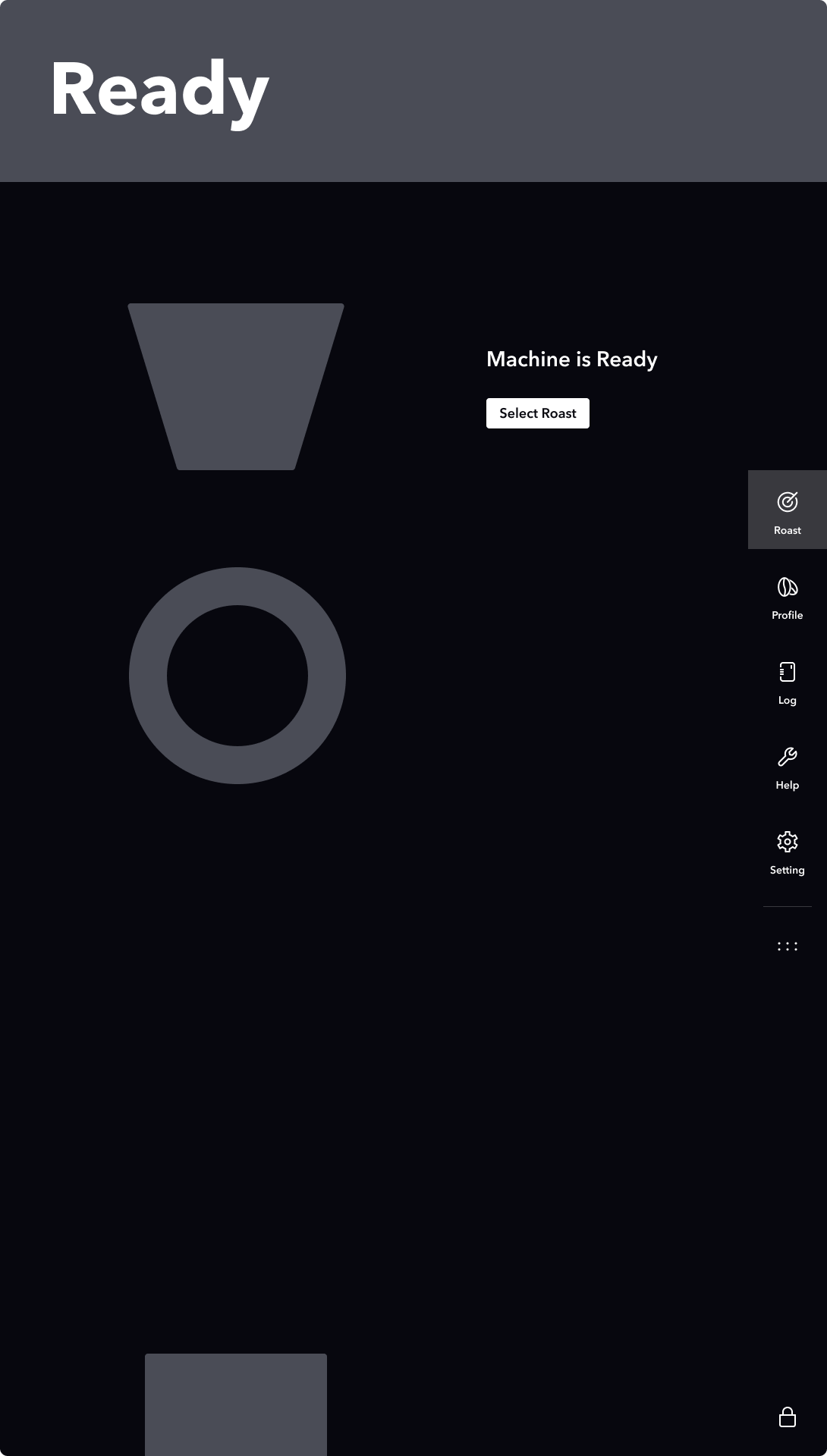
Celebration screen confirms the roast is done. Bean name and roast level displayed. The moment of satisfaction before the machine resets to ready.
Scroll to explore →