The Opportunity
We had the most complete picture of restaurant customer behavior in our market. We weren't acting on it.
Revi's ecosystem spans consumer app, kiosks, and point-of-sale terminals. Behavioral data across the full customer journey from discovery to ordering to repeat visits. Most companies have one slice of that picture. We had all of it.
The question I brought to the executive table wasn't "should we build a recommendation feature." It was: why are we sitting on this and only using it reactively? What if we could proactively surface food, events, and new places before a user even opened the app with clear intention?
How It Started
The CEO's vision was an AI agent. My job was to make it real.
I was in the executive sessions, alongside the CEO, his CEO coach, the VP of Engineering, and the VP of Product, when the vision took shape: a fully personalized AI agent that could prompt recommendations across Revi's entire network. An idea that could define the company. Also one that could stall indefinitely if you tried to build it all at once.
So I found the increment. Instead of waiting on the full agent, I scoped a marketing tool that used the same recommendation intelligence but lived inside the partner dashboard. Something partners could activate themselves. Something the sales team could sell today. Same data, same AI backbone, but packaged as a product that could ship now and generate revenue while we built toward the bigger vision.
The Deep Work
Intent types, confidence scores, and why the ML work was a design problem.
Working directly with the ML engineer, I helped define an atomic taxonomy of intent types, each mapped to a confidence percentage that it would lead to an order. This wasn't a UX document. It was a design + data architecture problem: what are the smallest-unit signals we can trust, and at what threshold do we surface a recommendation versus stay quiet?
Getting this wrong in either direction has a real cost. False positives create noise and erode trust. False negatives leave revenue and engagement on the table. The intent taxonomy was the core logic that everything else was built on.
The Onboarding Challenge
We needed user preferences. I made getting them feel like a game.
For intent modeling to work well, the system needs to know the user from the start. Cold-start is the classic hard problem for recommendation engines, and the standard fix (a setup survey) kills activation rates before you even get to a first session.
I prototyped the onboarding in Loveable, designing for haptic feedback and puzzle-like interactions. The goal was to make preference-gathering feel like a playful experience, not a data intake form. Something users would actually complete. Every interaction became a training signal.
Impact
The marketing tool is live. The bigger product is in motion.
What's Next
The marketing tool is the research. Now I want to ship the real thing.
The intent taxonomy was an educated starting point. What I want now is the data the marketing tool has been quietly collecting: real signal about which confidence-level recommendations convert, which intent types create friction, where the model's assumptions were wrong. That data shapes an MVP tight enough to ship fast.
AI is moving quickly. There's a version of this product that could be built leaner right now. Calendar and email integration that would have required months of infrastructure a year ago is accessible with modern LLM tooling. I want to close that gap before the moment passes.
The Design
Walking through the Jarvis flow, from lock screen to pickup.
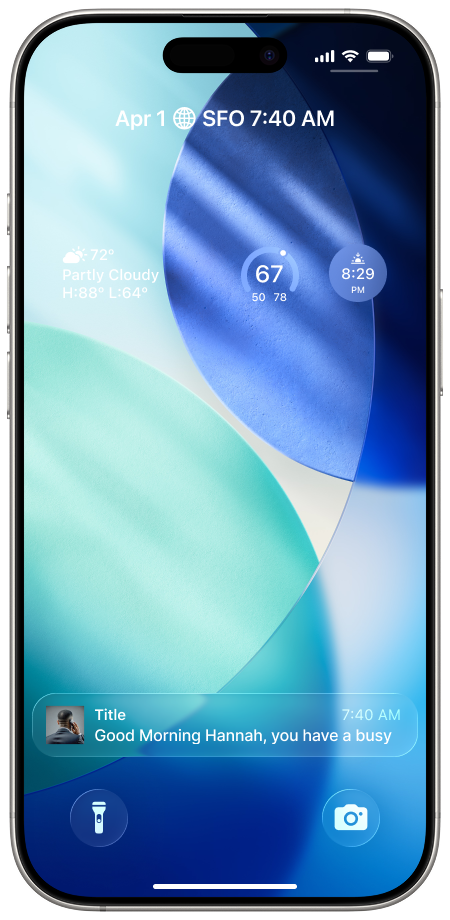
Entry Point
Jarvis greets you on the lock screen with your morning schedule and a proactive suggestion.
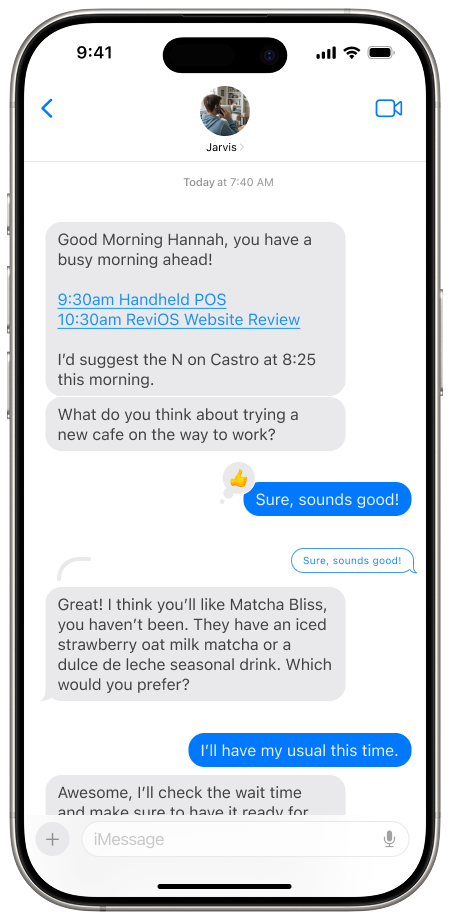
Intent + Recommendation
Conversational UI surfaces a new cafe based on your taste profile. You accept or redirect naturally.
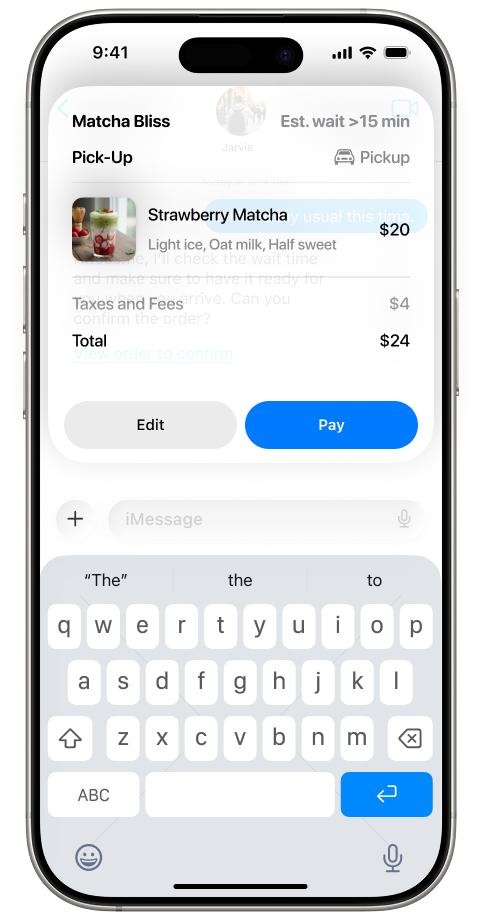
Inline Order
Order summary, customizations, and payment all happen inside the conversation. No app switching.
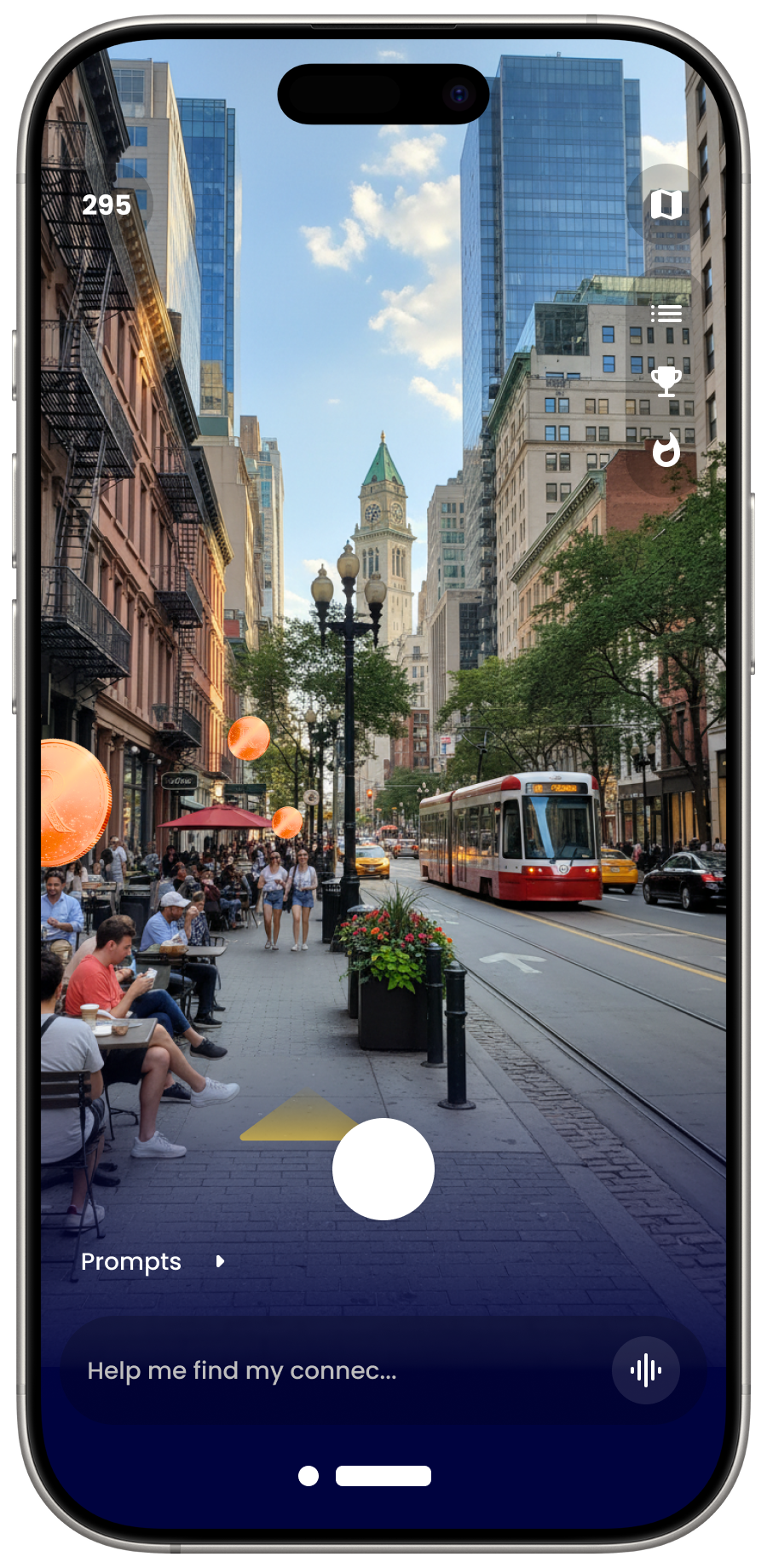
AR Discovery
Camera-based discovery layer highlights partner venues with contextual markers as you walk.
Gamification
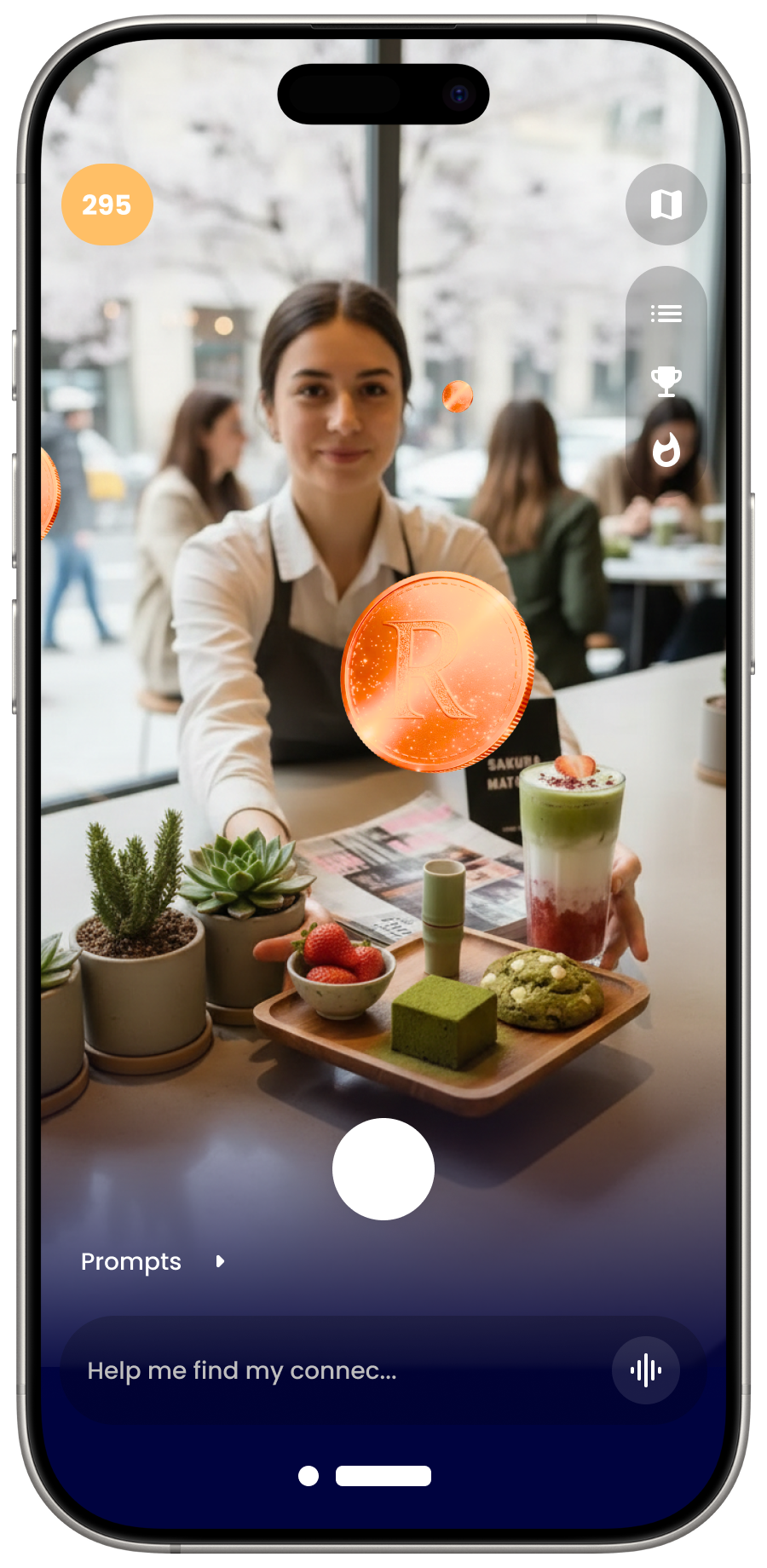
Arriving at the venue triggers a points reward. Builds a loop that ties discovery to loyalty.
Pickup
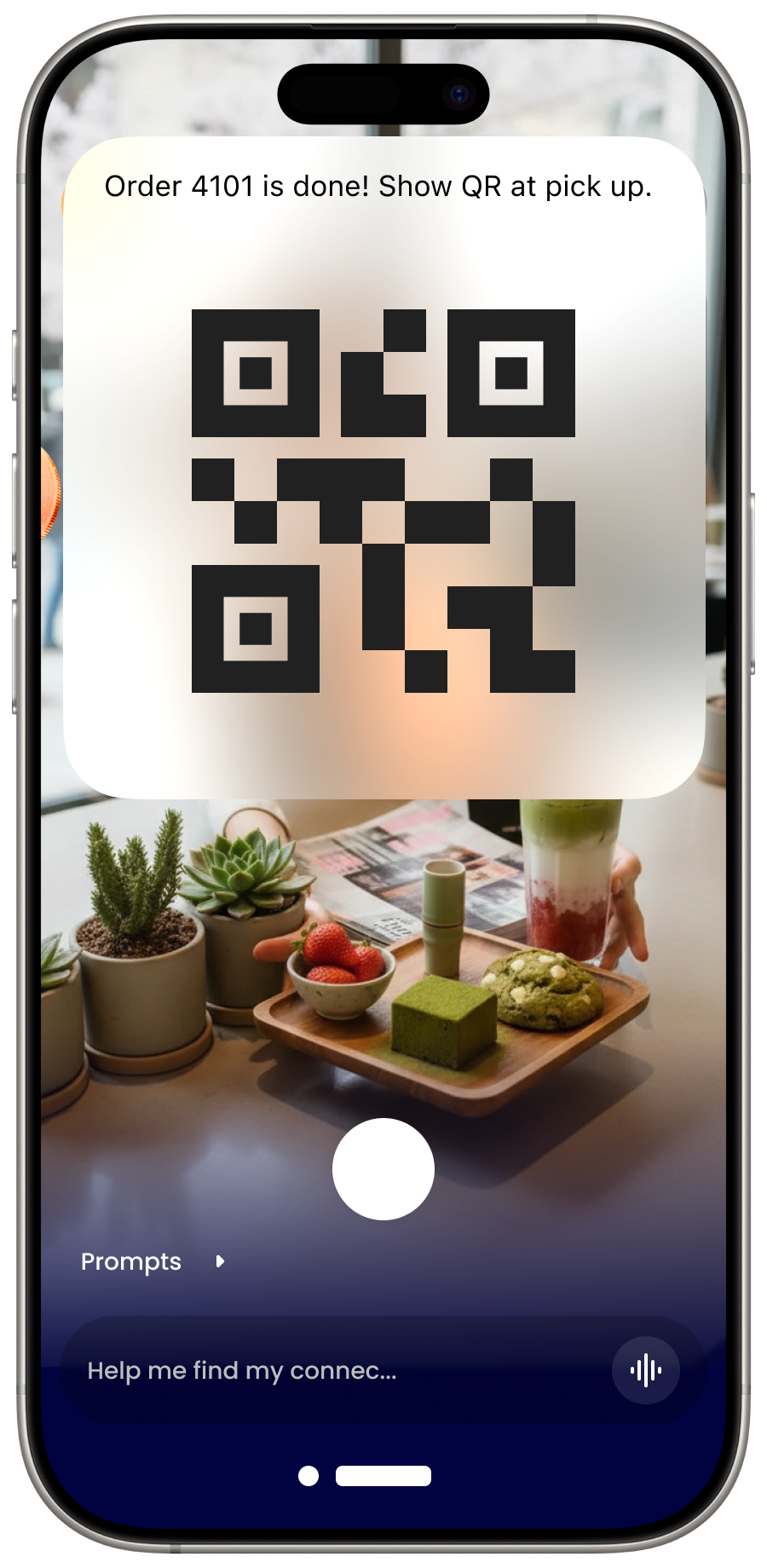
QR code pickup closes the loop. The entire flow from notification to food in hand, no friction.
Scroll to explore →